
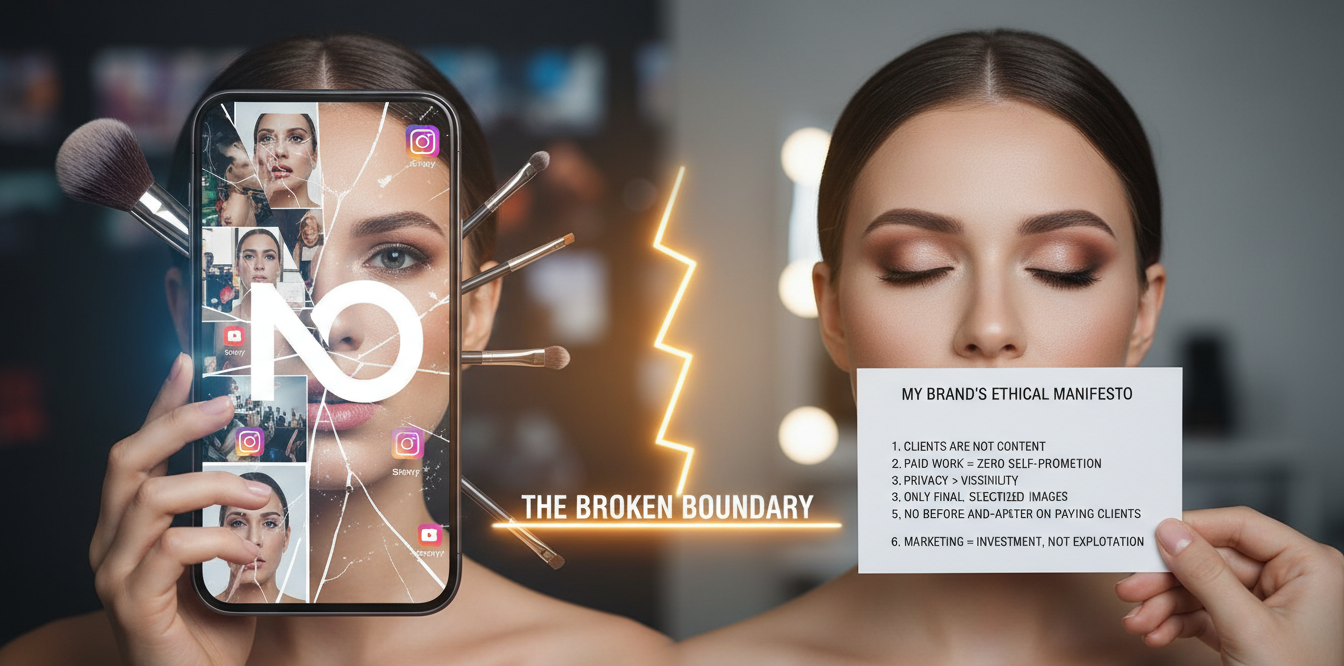
When Marketing Ends and Exploitation Begins
The Broken Boundary between Visibility and Professionalism
Being a professional makeup artist is not just about knowing how to do makeup-that’s the minimum. Being a true professional also means having a clear ethical framework, distinguishing the licit from the convenient, and understanding that visibility does not justify everything. In recent years, ethics in makeup have been sacrificed on the altar of social exposure. The result: blown boundaries, confused roles, and clients turned into marketing tools.
Clients are NOT Content: Golden Rule of Ethical Makeup.
Clients pay for a makeup service, they do not pay to become content, reel, story or disguised portfolio. Whenever a paid job is exploited for the makeup artist’s personal promotion, it is not marketing: it is exploitation. It is not opinion, it is lack of professional dignity.
Wedding and Privacy: Bridal Makeup is Not a Free Set
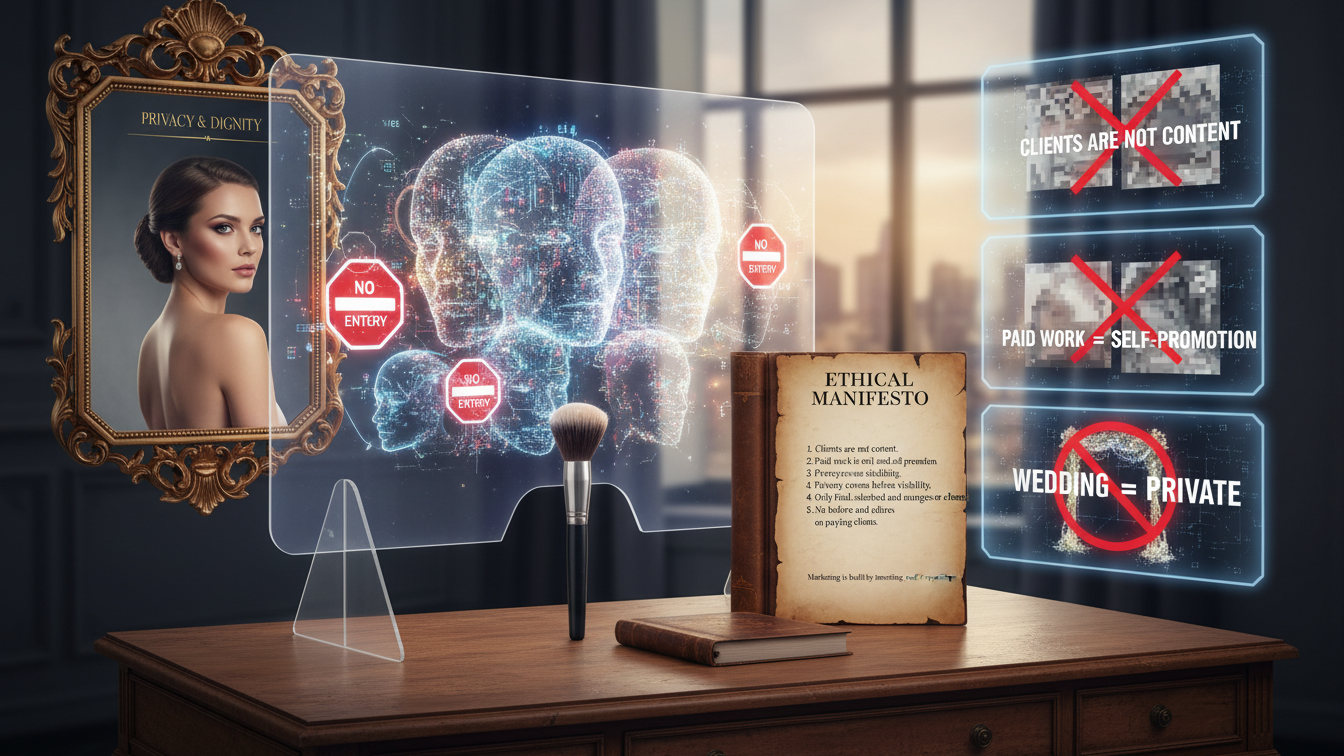
Release: the Signed Consent
Any use of the photographic and/or video material for promotional, advertising or professional communication purposes may only take place with the express, informed and specific consent formalized through this release. In the absence of such consent, the material may not be published, disseminated or used in any form.
Respect, Transparency and Professional Responsibility
The make-up artist acknowledges that unauthorized use of images or videos constitutes a violation of privacy and the fiduciary relationship established with the bride and groom, and therefore undertakes to fully comply with the agreed limits and conditions.
Before & After: Why the Before & After on Paying Customers is Harmful
There is a huge difference between sharing and exploiting. If a photographer posts final, retouched and selected images, the makeup artist can repost: they are finished results, not processes. Posting before and afters on a paying client is not transparency, it is unnecessary exposure that takes away dignity from those who paid you to feel valued, not analyzed. If the client voluntarily sends beautiful, finished photos, that’s another matter; in all other cases, you don’t do it.
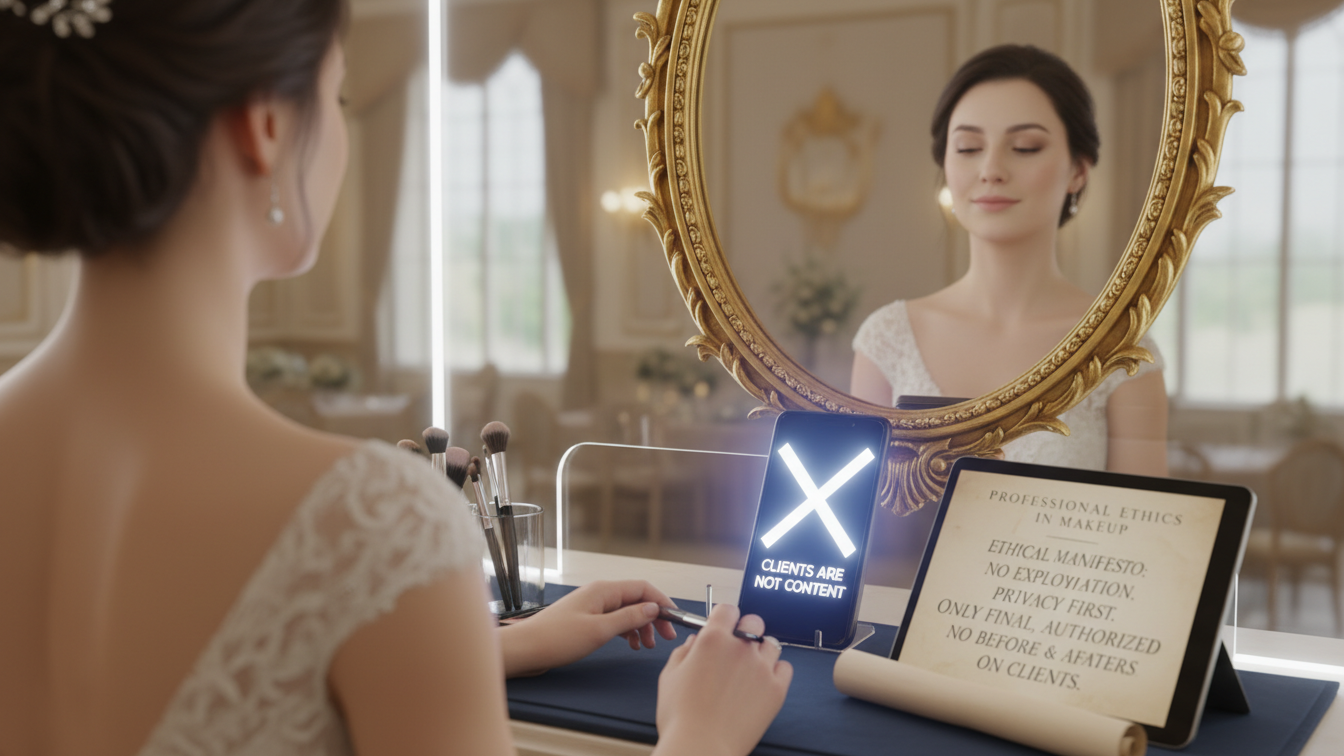
My Brand Ethics Manifesto: 6 Non-Negotiable Rules
- Clients are not contained
- Paid work = zero self promotion
- Privacy > visibility
- Only final, selected and authorized images
- Prohibited before and after on paying customers
- Marketing = investment, not exploitation
Old Guard or Professional Consistency?
If this view seems radical today, the problem is not what it represents, but how far we have strayed from the true meaning of professionalism. Working does not mean exposing oneself at any cost or exploiting the image and trust of others to gain visibility.
When Ethics Really Defines Professionalism.
Without ethics, there is no authentic work, only a showcase built with economic investment, marketing strategies, and apparent consensus. Professionalism requires respect, responsibility and consistency between what you show and what you are. This approach may not be fashionable, but it remains the only one in which I recognize myself.
