
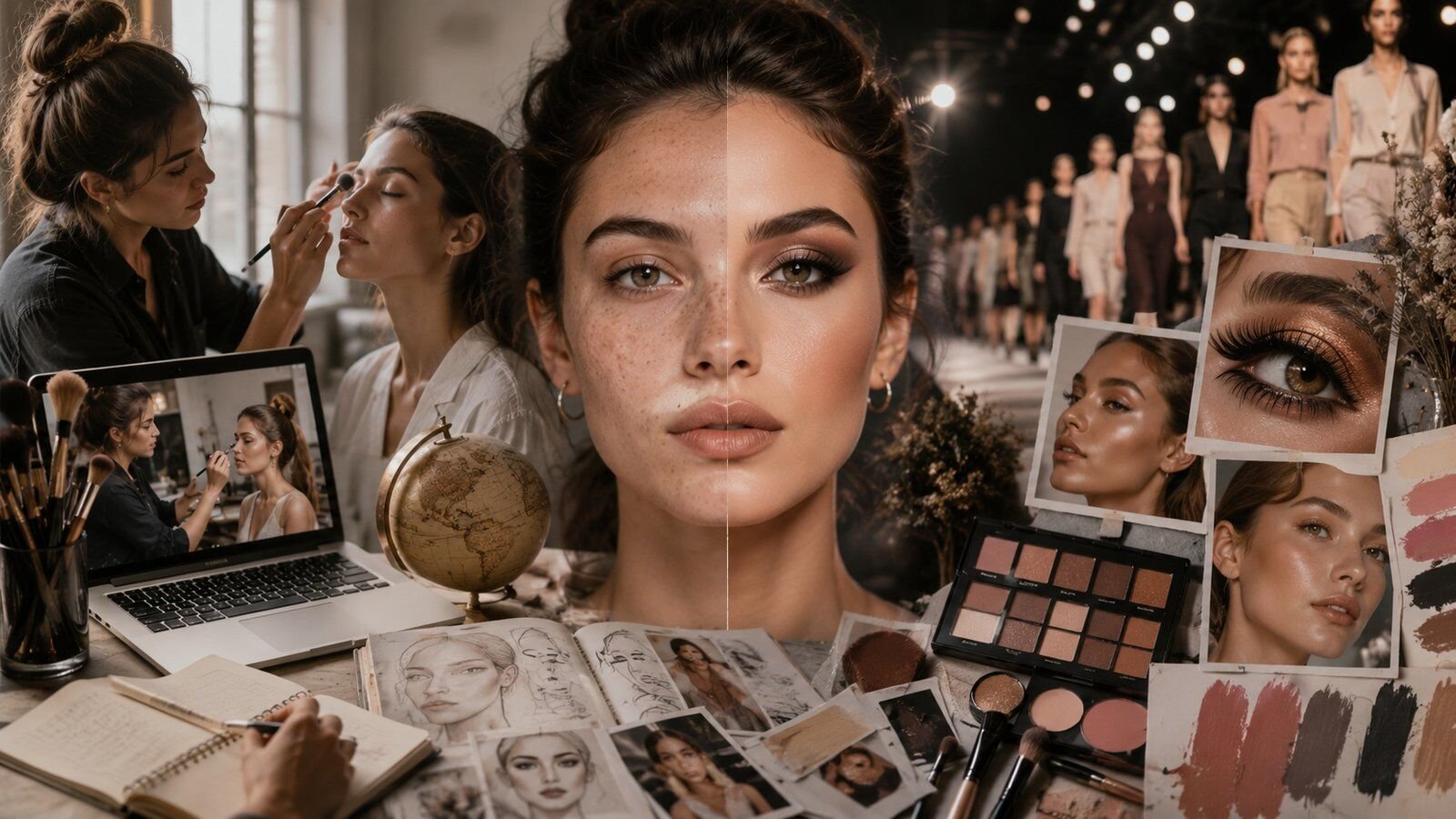
Don’t confuse the trend with the technique
A trend isn’t a technique. And becoming a makeup artist in 2026–2027 means much more than just learning how to apply makeup in front of a screen.
But has makeup really become easier these days, or have we simply gotten better at making it look easy?
It’s a question I often find myself asking, especially when I see how much the approach to the world of makeup has changed in recent years.
When I first started out, learning this trade meant, above all, observing, studying, practicing, and looking for opportunities to work. It meant being curious, checking out what other professionals were doing, trying to understand how they worked, asking questions, and very often making mistakes. There was no way to pick up a phone and, in a matter of seconds, find hundreds of tutorials created by people from all over the world.
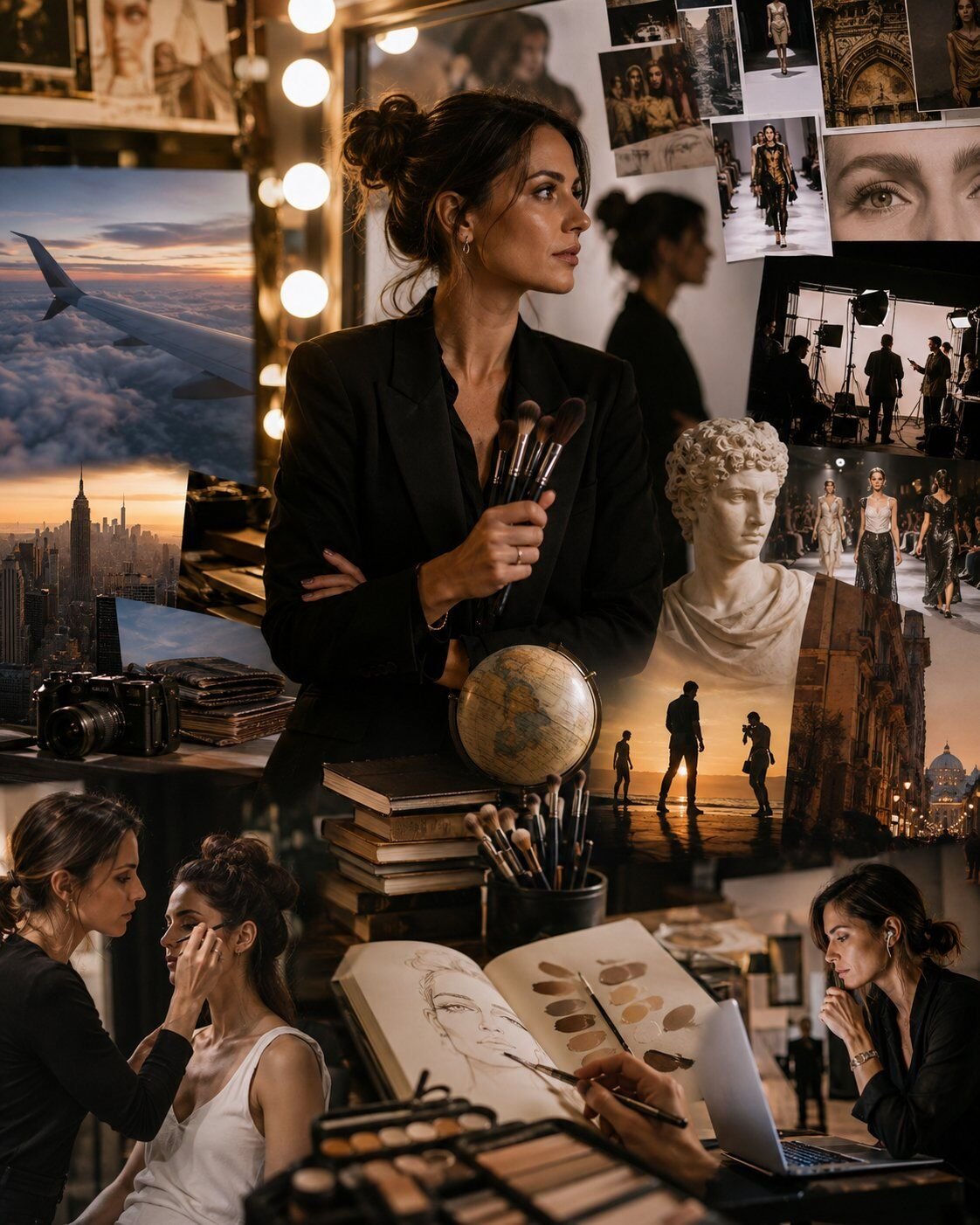
A tutorial doesn’t make you a makeup artist: here’s what really makes the difference
Today we have an extraordinary opportunity that didn’t exist before: we can access a vast amount of information. We can study online, follow international experts, take part in remote classes, engage with communities on the other side of the world, and continue our education even when we can’t be physically present in a classroom.
I myself am working toward this very goal with a new online training project, because I firmly believe in the possibilities that digital technology can offer.
The problem, then, isn’t the web
The problem arises when we confuse the tool with the craft.
Because watching a tutorial, taking an online course, or learning a technique online can be a great starting point, but becoming a makeup artist means putting everything we’ve learned into practice in real life, in front of real people, real faces, and in different and often unpredictable situations. And that’s exactly where, in my opinion, the real challenge lies today.
Makeup trends are constantly changing, but professionalism remains the same
In 2026–2027, the world of makeup is going through a particularly interesting phase. After years in which we’ve seen a highly constructed ideal of beauty dominate social media, we’re now witnessing a return to more natural-looking skin, less-than-perfect textures, lighter foundations the so called “skinimalism” and “soft-matte”—and a greater acceptance of a face’s natural features.
At the same time, however, color is back in the spotlight, smoky eyes are making a comeback, lip looks are being reimagined, and we’re seeing more expressive and creative makeup on the runways.
At first glance, it might seem like a contradiction. To me, however, it’s simply the way fashion and beauty evolve.
Trends don’t really disappear: they come back, are reinterpreted, blend with what we’ve experienced in previous years, and take on a new form.
That’s why a professional needs to be aware of trends. They need to know what’s going on; they need to observe, study, and stay up to date. But being aware of a trend doesn’t necessarily mean they have to replicate it on every face.
- This is where, in my opinion, we need to make a fundamental distinction: a trend is not a technique.
- Trends change. The technique remains.
- Above all, technology must serve people, not the other way around.
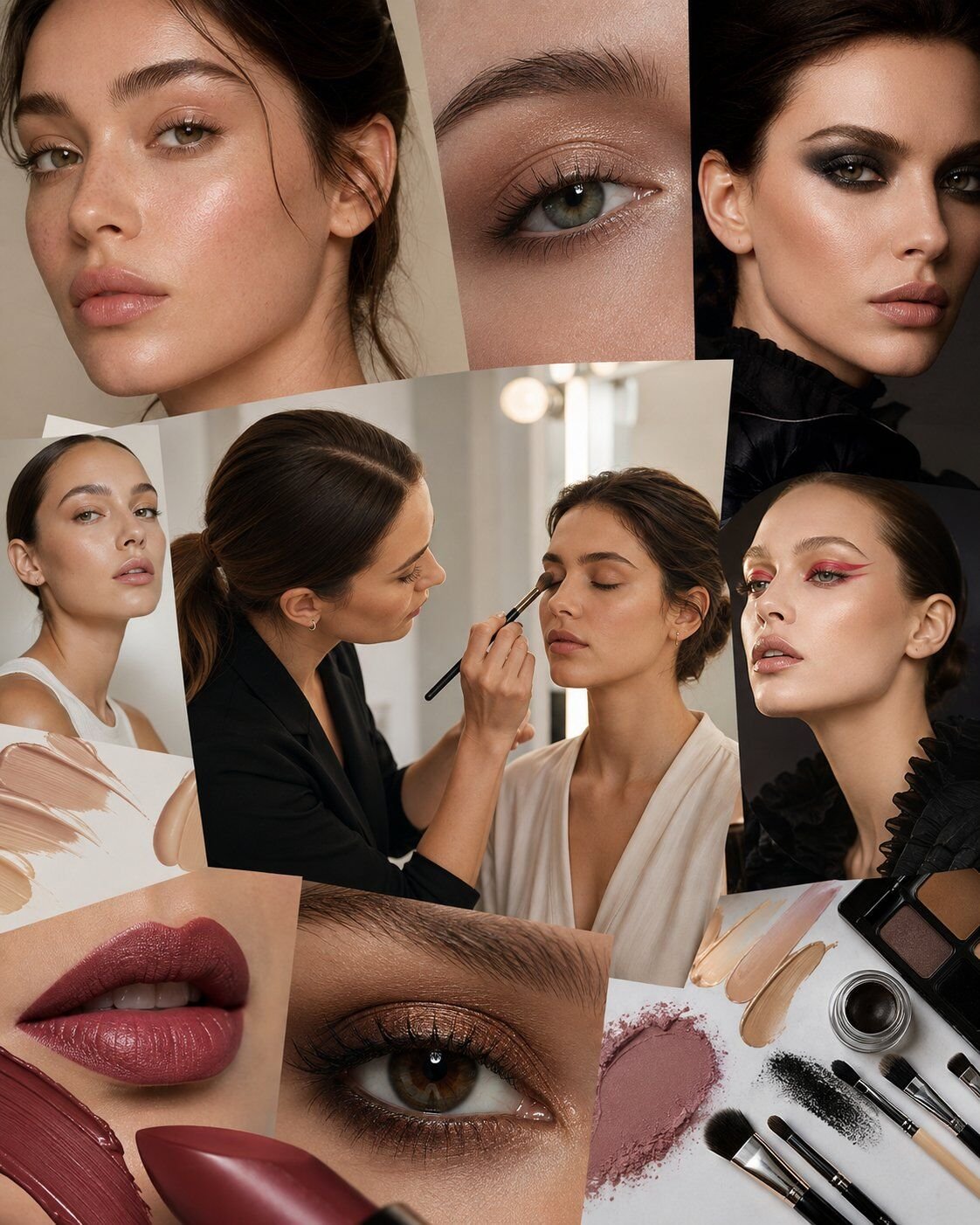
The Risk of Always Taking the Easy Way Out
I’ve been teaching for many years now, and over time, I’ve seen a profound change in the way people approach this profession.
These days, it’s very easy to fall in love with the image of a makeup artist. On social media, we see stunning work, behind-the-scenes footage, photo shoots, products, makeovers, runway shows, and perfect photos. Everything seems fast-paced, glamorous, and instant.
But the real profession is much more complex than what we see on screen.
And that is precisely why I don’t believe in looking for the easiest path. Instead, I believe in looking for the path that allows us to grow.
This does not mean at all that online training is not valuable. On the contrary. If designed well, it can be an extremely important tool and can enable a great many people to learn from professionals they would otherwise never have the chance to meet.
But a training program—whether online or in person—must have one goal: to provide tools that are then put into practice.
Because no video can fully replace the experience of standing face-to-face with someone who has distinctive skin, a face that’s hard to read, a specific request, or perhaps an idea that’s completely different from what we had imagined.
That’s where the real work begins.
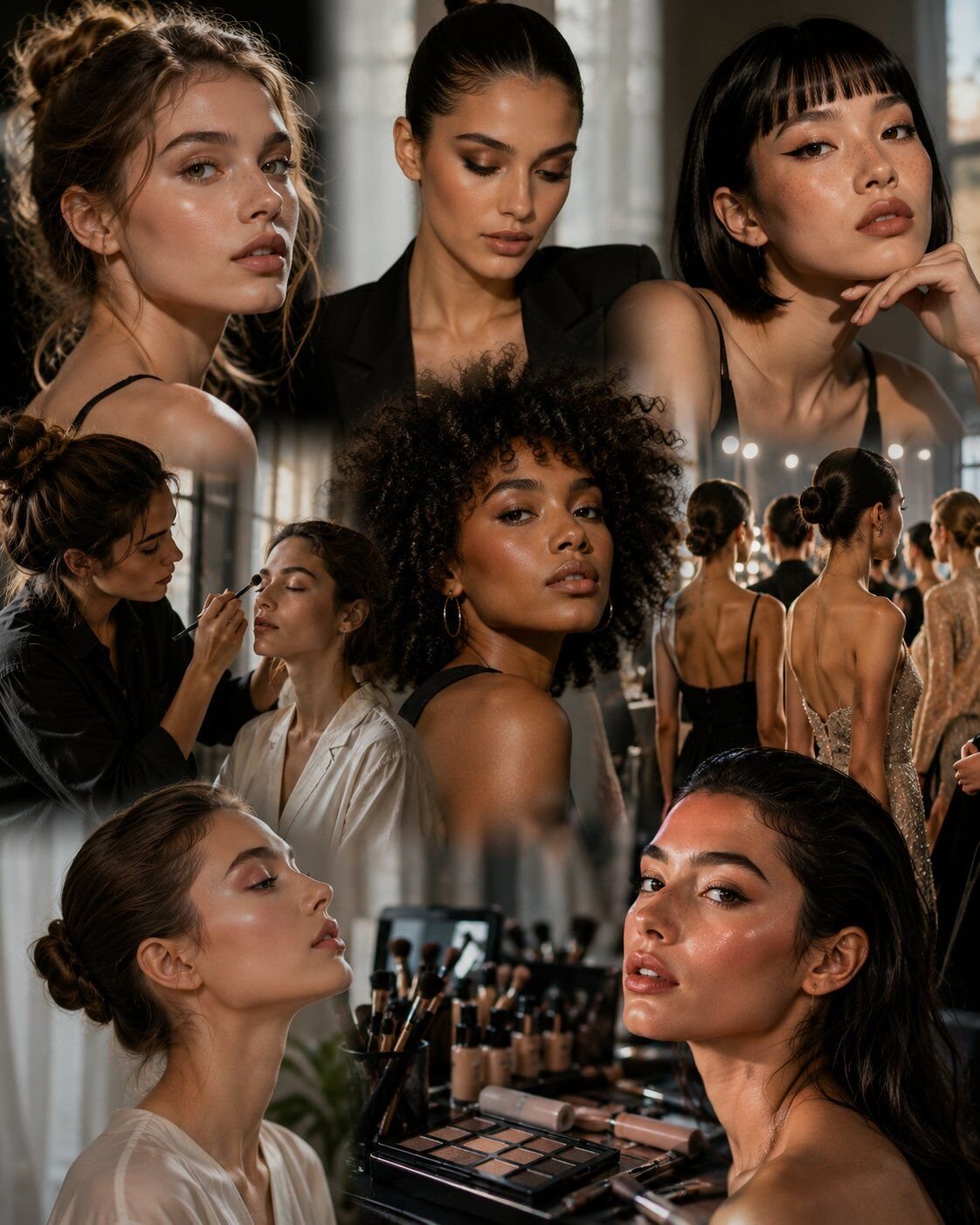
Being a makeup artist in 2026–2027 means being curious
The word itself says it all: makeup artist. To me, being an artist means, first and foremost, being curious.
Curious to learn, to see, to travel, to observe different cultures, to study the history of fashion and makeup, to watch a movie and wonder why that character was made up in just that way. It means looking at a photograph, a fashion show, or a work of art and letting yourself be inspired.
I’ve been fortunate enough to travel extensively for work and to encounter a wide variety of professional environments. Every trip, every production, and every person I’ve met has left its mark on the way I work. I believe it’s precisely this curiosity that makes all the difference. A makeup artist can’t just stick to what they already know how to do. They must keep exploring.
You have to be willing to put yourself out there, to take risks, and to try new approaches. You also have to have the courage to step outside your comfort zone. Because this is a profession where you never stop learning.
People always come before trends
Keeping up with trends is important. But knowing what the customer wants is even more important. This is one of the things I’ve come to consider essential over the years.
A client isn’t just a face on which we have to demonstrate our technique. She is a person with her own personality, her own way of seeing herself, her own expectations, habits, and often even little insecurities.
Our job is to listen to her
We need to understand what she’s asking of us, but also know when a particular solution isn’t right for her. We need to get to know the face in front of us and find a way to bring out its best without necessarily turning it into something we’ve seen on social media.
Even technically perfect makeup can look wrong if it doesn’t suit the person wearing it. That’s why, before we even choose a color or a technique, we need to learn how to observe.
Morphology, color theory, skin texture, proportions, light, age, style, and personality become the tools through which we can shape our work.
The trend comes after
Knowing oneself is part of the profession
There’s another topic that’s being discussed a lot these days, especially on social media: becoming the best version of yourself. It may sound like a cliché, but in our line of work, I believe it has a very concrete meaning. To become professionals, we must learn to know ourselves. We need to understand what our strengths are, where we excel, and where we still need to improve. We also need to learn to embrace feedback.
We can’t be the best at everything, and we shouldn’t be afraid to admit it. Throughout my career, I’ve worked alongside people who were better than me at certain things, and I’ve learned from them. I consider this perfectly normal. A professional doesn’t stop being a professional just because they recognize someone else’s talent. On the contrary, they can become even better precisely because they keep learning.
The problem arises when comparison turns into judgment. We live in an age where it has become incredibly easy to judge. All it takes is a screen to comment on someone else’s work, appearance, or choices. But destructive judgment doesn’t help anyone grow.
At work, just as in human relationships, I think it’s much more useful to learn to observe, understand, take what we need, and keep building our own path. Ultimately, the real goal shouldn’t be to become someone else. It should be to become the best version of ourselves.
Working your way up is part of being a makeup artist
Every professional with years of experience behind them had to start somewhere. There are no shortcuts that can completely replace experience. You learn through school, through personal study, by following the best, by observing, by practicing, and then by working. And often, you start right at the bottom.
Working your way up isn’t a waste of time
It’s the time when we learn to function in a professional setting, to meet deadlines, to collaborate with others, to handle unexpected situations, and to realize that real-world work is very different from what we imagine when we still know it only in theory.
A school should provide the foundation and tools needed to embark on this journey. Then you have to keep going. And that is also why I believe it is important today to be able to use both traditional and digital learning methods. The methods may change, but the principle remains the same: study so you can work better.
When a Student Becomes a Colleague
One of the greatest joys I’ve experienced in my many years of teaching is being able to call on a former student of mine for a job.
It always gives me great pleasure. Because it means that person has started to forge their own path.
He took what he had learned, processed it, blended it with his own experiences, and began to shape his own talent. And that is exactly what a good education should do: not create copies of the teacher, but help each person find their own professional identity.
When I see a former student of mine at work and recognize in her skills something that stems from the journey we took together, I feel a sense of satisfaction that’s hard to explain. But I’m even happier when I see that she has become someone different from me. Because that means she has found her own path.
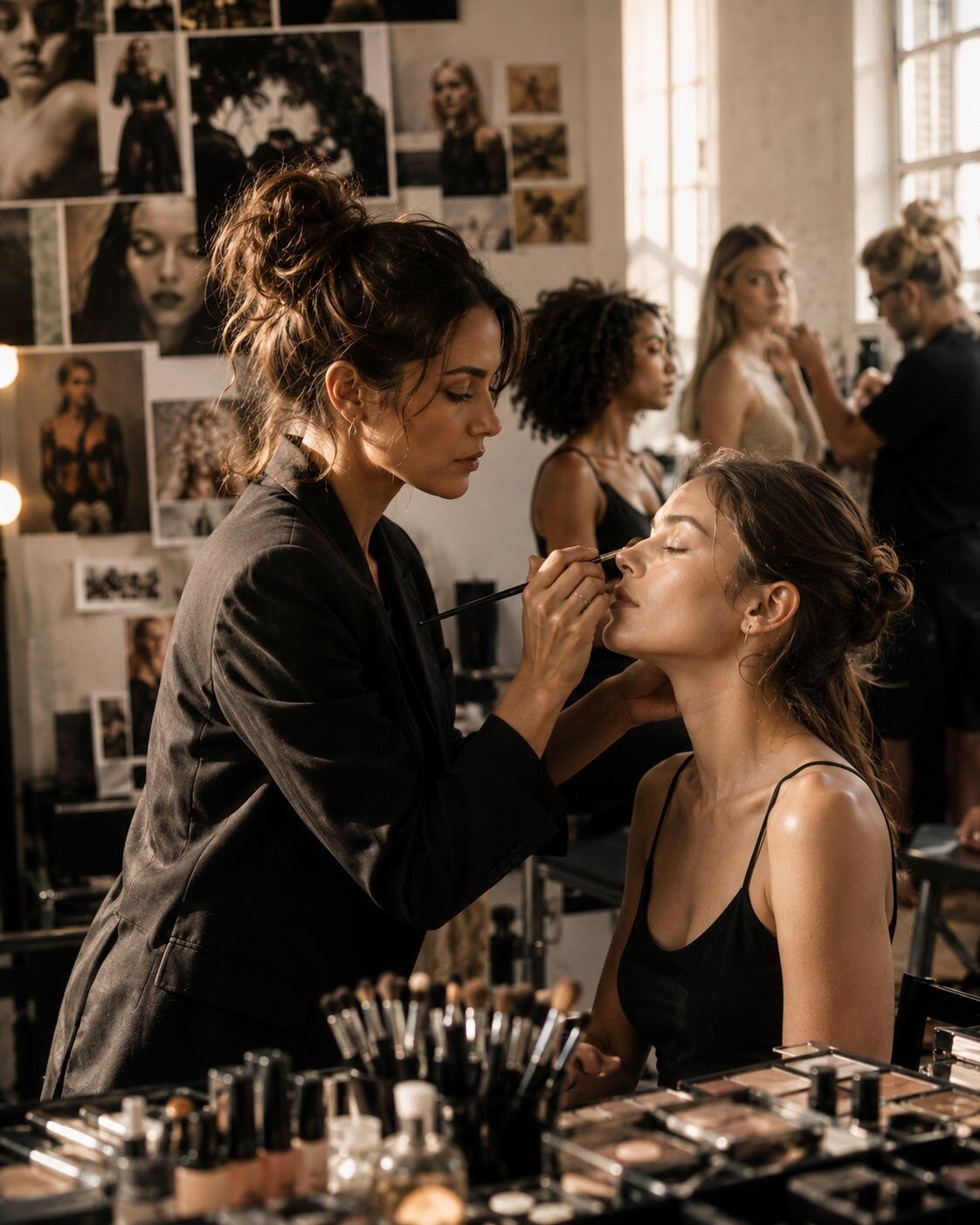
The customer is our real boss
When we choose to make makeup our career, we need to remember one very simple thing: our work exists thanks to the people who choose to put their trust in us.
And we don’t have a single customer
We may have dozens or even hundreds of them in a year, each with a different personality. This forces us to grow as people as well. We must learn to listen, communicate, respect others, be punctual, organized, and reliable. We must know how to handle different situations and stay calm when things don’t go according to plan.
Above all, we must be technically prepared. We are technical professionals, and we must strive for excellence in everything we do. Creativity is essential, of course. But without technical preparation, it risks remaining just an idea. Technical skill allows us to turn an idea into a tangible result.
Discretion is also a mark of professionalism
There is also one aspect of our work that I consider increasingly important: privacy.
We live in an age where “let’s meddle in other people’s business” is the norm. Everything is photographed, recounted, and published. Every moment can become content.
But the customer isn’t included
This is someone who chose us and placed their trust in us. In my line of work, I’ve worked—and continue to work—with well-known figures, VIPs, and international clients. In these situations, I’ve learned even more just how important discretion is. Not everything that happens during a job needs to end up on social media. Not everything needs to be photographed and shared. Sometimes the most professional thing we can do is simply not to post it.
The trust a client places in us is worth much more than an Instagram story. I believe this, too, is part of our professional training.
The future of makeup isn’t at odds with digital technology
I don’t think the future of makeup has to be a choice between the real world and the digital world.
I think exactly the opposite
We’re fortunate to live in a time when we can make use of both. We can study online and then put what we’ve learned into practice. We can follow a professional on the other side of the world and then exchange ideas with a colleague who works in our city. We can use social media to showcase our work, our style, and our skills. We can use technology to learn, stay up to date, and communicate.
But we must remember that digital technology should be a tool, not our only professional environment. Because makeup is all about people, faces, hands, relationships, experience, and above all, the ability to adapt to what we’re working with.
In 2026–2027, we don’t need less social media. We need more professionals.
Perhaps that’s exactly where I started. Makeup seems simpler today because we’ve learned to present it so well. We see the final result: the edited video, the perfect lighting, the flawless skin, the precise technique.
But behind that gesture when true professionalism is at work there are years of study and experience. There are mistakes, there are difficult days, there are different clients, there are projects no one will ever see, there are hours spent studying and practicing, there are trips, meetings, collaborations, observation, and a lot of hard work—and above all, there must be a thirst for learning.
That cannot be replaced by an algorithm.
Trends will continue to change. Today we’ll talk about skinimalism; tomorrow another trend will resurface; and the day after tomorrow, we’ll probably bring back something we thought was gone for good.
Products will change. Technologies, social media, communication methods, and even the way we conduct training will change.
But some things will continue to have value
Curiosity, technical skill, experience, respect for the client, the ability to listen, discretion, a willingness to take on new challenges, and the ability to continually improve.
Because after so many years in this line of work, I’m more and more convinced that a true professional isn’t someone who already knows everything. It’s someone who, despite years of experience, still wants to learn something new.
And perhaps that is precisely the most wonderful thing about our profession: knowing that, with every new face, every new project, and every new experience, we can become just a little better than we were yesterday.
Trends come and go. The makeup artist’s professionalism remains.
